
Sanjeev Gupta, chief of Liberty House, is being dubbed UK's new 'man of steel' after he emerged as a potential saviour of 4,000 jobs

Fast-moving consumer goods major Dabur India is set to enter the branded spices and seasoning category. It has signed an agreement to acquire 51 per cent in Badshah Masala for a cash consideration of Rs 587.52 crore. The acquisition, the company says, is in line with its strategic intent to expand its food biz to Rs 500 crore in three years.

The flight, carrying 216 passengers and 16 crew, landed safely, the Tata Group-owned private carrier said in a statement Tuesday evening.

'As our per capita income increases and various demographic segments emerge, the need for various kinds of protection and risk covers will become even more explicit.'

The slot constraint in Indian airports is also going to play a role in pushing airlines to have wide bodies.

Infosys needs to be more innovative and disruptive with its product and services, keeping its focus on growth.
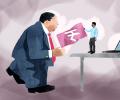
The headline for corporate profit growth has been very encouraging in the July-September quarter (Q2) of 2023-24 (FY24), with the combined net profit of listed companies up by 38 per cent year-on-year. However, the earnings distribution has been very lopsided, with most of the growth coming from public-sector oil-marketing companies (OMCs), banks, non-bank lenders, automobile (auto) companies, and cement producers. By comparison, companies from information technology services, fast-moving consumer goods (FMCG), retail, and consumer durables were disappointed, experiencing a sharp slowdown in net sales growth and a relatively muted increase in reported net profit.

The latest results suggest Tata Steel Europe may have lost pricing power, though production and turnover are up.
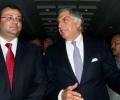
'And he was really trying just to do the best by the shareholders, and by the laws of India.'

Both benchmark indices were driven by strong gains in IT, teck, oil and gas, pharma and banking shares amid earnings optimism.

That means a manufacturer looking at a market like India needs to decide whether small, cheap cars or small, expensive cars or both will work better for them, says Pavan Lall.

Recently, world headlines buzzed with Elon Musk's announcement that he was shelving his audacious bid for social media platform Twitter. Away from the media spotlight, questions are being asked about the maverick billionaire's plans in India, too. A few days ago, a Reuters report said Musk's flagship Tesla had put on hold its plan to launch electric cars in India.

India's electric mobility goal, which has so far been riding on two wheels, is all set to graduate to four wheels. At least, the journey has begun. Hyundai Motor India said it would invest Rs 4,000 crore till 2028 to launch half-a-dozen electric vehicles (EVs) in India. It would eventually straddle premium and mass segments. The first of these - the electrified version of an internal combustion engine (ICE)-powered model - will go on sale as early as next year.

Investors' wealth tumbled by over Rs 7.35 lakh crore on Friday, with the BSE benchmark Sensex plummeting 1,688 points amid a global selloff triggered by a new coronavirus variant. The 30-share index tumbled 1,687.94 points or 2.87 per cent to close at 57,107.15. During the day, it tanked 1,801.2 points or 3.06 per cent. Tracking the weak trend, the market capitalisation of BSE-listed companies slumped by Rs 7,35,781.63 crore to reach Rs 2,58,31,172.25 crore.
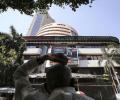
In the broader markets, the BSE Midcap and Smallcap indices extended gains and were up over 1% each

It's Sanjeev Chadha, named Pepsi's chief executive for Asia, W Asia & Africa, versus Coca-Cola's Atul Singh.

Acquisition of stressed infrastructure assets has pushed its debt to over Rs 1 lakh crore, highlighting concerns about its growth strategy.

Prime Minister Narendra Modi is not taking along an industry delegation to the US but top representatives of India Inc are likely to travel to New York and Washington to be part of the power-packed business meetings and receptions being hosted for him.

Markets shrugged off RBI's neutral stance on key policy rates.

Bank shares were the top losers along with index heavyweight RIL

The multi-brand strategy could drive profitability to a 25% profit margin in the next five years from 17% now.

At 15.05 PM, the 30-share Sensex was up 281 points at 28,238 and the 50-share Nifty gained 86 points at 8,577

The company reported 13.5 per cent rise in revenue to Rs 23,816 crore (Rs 238.16 billion) in the second quarter.
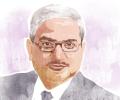
On February 19, India's largest private low-fare airline IndiGo announced the resignation of one of the two founders, Rakesh Gangwal, from the airline's board and his intentions of offloading his stake in the airline over the next five years. The announcement came on a Friday, giving the stock markets the weekend to absorb the news but the markets registered a tepid response on Monday's opening. In contrast, in July 2019, when the fight between the two founders and erstwhile friends first became public, the markets reacted savagely. The IndiGo scrip at the time fell 19 per cent, wiping out millions of rupees of shareholder wealth before bouncing back. For readers who may be hazy on the details of the dispute, here is the context.

Cumulative sales of India's top passenger vehicle makers -- Maruti Suzuki, Mahindra and Mahindra, Tata Motors, Honda Cars, and Toyota Kirloskar -- increased to 206,418 units in February over 200,322 units in the same month last year, an increase of 3 per cent.

Promoter holding in family-owned firms up 70 bps since 2005, 240 bps since 2010.

Jaishankar is the first foreign secretary to head the Ministry of External Affairs as minister.

Reliance's big-bang entry across the solar ecosystem will cut dependence on Chinese imports drastically. And Ambani's repeated emphasis that RIL's new energy foray will be 'a truly global business' points that his group is playing not just for a share of the Indian pie but to be the OEM in the larger 5,000 GW global market by 2030, points out Shailesh Dobhal.

Was Kerkar duped by his employees, as he claims, or did a cocktail of greed, poor cost control and bad management bring the travel firm down, wonder Pavan Lall and Aneesh Phadnis.

The third-quarter financials didn't excite market watchers. But equity investors can still make money if they invest in the right stocks.

The broader markets ended in line with the benchmark indices- BSE Midcap and Smallcap indices ended higher by 1.3% and 0.9% each.

Getting an assurance from the Apple CEO on manufacturing in India will mean much to the NDA government.

'Approach people with respect, mindful that they know their job better than you do, and that you're not superior to them just because you may be better educated or their boss.' Skoda Auto VW India MD Gurpratap S Boparai cites his management credo to Pavan Lall.

A recovery in rupee, buying by domestic institutional investors, encouraging earnings by select blue-chips and stock specific buying helped the market get back on its feet
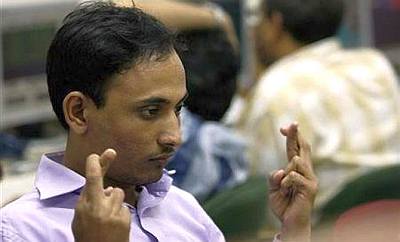
Investors remain cautious ahead of F&O expiry.
While Infosys has increased the margin guidance for FY21 by 100 bps to 24-24.5 per cent, analysts believe there will pressure on near-term margins as discretionary cuts - promotions and travel, headcount addition, record utilisation, and wage hikes start to reflect on costs.
ICICI Bank, SBI, Axis Bank and HDFC Bank dipped between 1-2% each.

India's equity markets are on a roller-coaster ride, after delivering spectacular returns for two consecutive years - in 2020 and 2021. The benchmark National Stock Exchange's (NSE's) Nifty50 is down 1.5 per cent in the first nine months of the current calendar year 2022 (CY22) as foreign portfolio investors sold Indian stocks due to rising bond yields in the US and across global markets, including India. The sell-off in the Indian equity markets has, however, not been broad-based and largely limited to sectors facing earnings headwinds from rising interest rates, lower commodity and energy prices, and likely economic recession in advanced economies.
When, recently, Bharti Airtel announced a Rs 21,000 crore rights issue, analysts pointed out that its structure was similar to that of Reliance's issue in June 2020. One similarity is that shareholders in both companies have to pay only 25 per cent of the money on application. The rest is to be paid in two tranches. In Bharti Airtel's case, it is within 36 months; in Reliance Jio's, it is within 17 months.

The broader markets are outperforming the benchmark indices.
 © 2026 Rediff.com - Investor Information - Advertise with us - Disclaimer - Privacy Policy - Sitemap - Feedback - About us - Terms of use - Grievances